





By Hannah Bower; Photo Credits to Hannah Bower
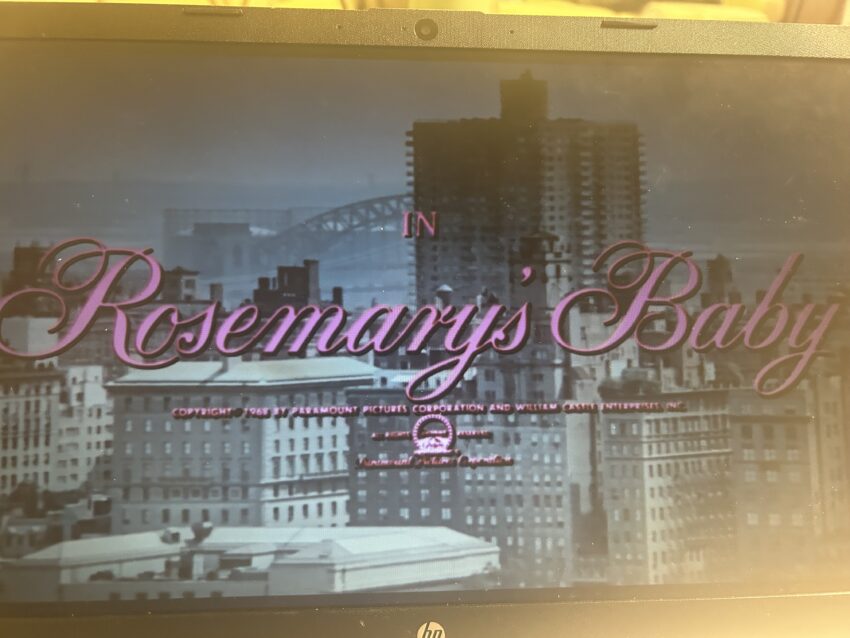
Halloween is in a few short weeks, and there are plenty of movies to get in the mood. “Rosemary’s Baby” is a classic psychological horror film that explores themes of women’s autonomy, paranoia, and a religious occult.
Filmed in 1968 during the peak of the pushback against the status quo, “Rosemary’s Baby” follows Rosemary and Guy, a newlywed couple who find their unborn to be the spawn of a demonic entity that is worshipped by the cult next door.
Upon moving to a new apartment in Bramford, Rosemary meets their neighbors, the Castevets, an older couple who seem well-meaning at first. Guy lands an important acting job, and to celebrate, he and Rosemary decide they want a baby. However, after a disturbing dream, inexplicable pains, and many strange ‘comfort meals’ provided by the Castevets, Rosemary begins to suspect that something went horribly wrong with her pregnancy. She doesn’t know who she can trust, and even Guy appears to only have his best interests at heart.
Rosemary later goes to her own doctor for assistance, but he believes that she is delusional and calls Guy to take her home. After realizing she can’t even go to her own doctor for help and that her husband gets oddly defensive about her concerns, Rosemary realizes that she will have to protect her baby all by herself.
As the film comes to a suspenseful close, it raises questions about a woman’s right to her own body and the ugly history of hysteria. One of the main critiques that the movie has received concerns Rosemary’s character, complaining about her lack of action to stop the horrible acts conspired against her.
I wholeheartedly disagree. At the time the movie was made, women were still fighting to be heard, and Mia Farrow’s performance certainly gives us that perspective. She voices her suspicions, does her own research about the history of satanic cults, and decides to run away. But whenever Rosemary speaks up, she is dismissed as hysterical.
Immoral mental hospitals were still recent during this period, and the attitude towards Rosemary resembled the perceptions of women in the 1940s and 1950s. She was viewed as a vessel to carry the demonic embryo, which was why other characters did everything to silence her.
“Rosemary’s Baby” is a must-watch for the month of October. The psychological horror of it is chilling, but it also explores issues that many women are still currently fighting.