



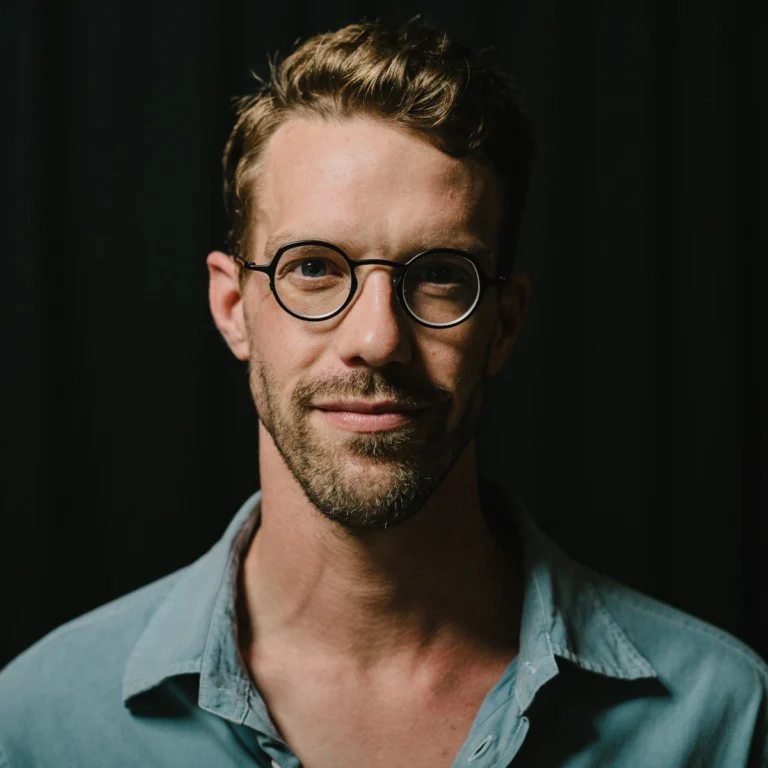
By James Shephard; Photo Credits to Daniel Uncapher
As Susquehanna University’s Creative Writing department faces changes to its faculty, Daniel Uncapher, a recent PhD graduate from the University of Utah, has stepped in as a visiting professor of Creative Writing.
Uncapher, a 36-year-old queer and disabled writer, describes himself as a “profound experimentalist and collage artist.”
He said coming to Susquehanna was about more than accepting a new teaching position, but rather, “to get back east of the Rockies, maybe even east of the Mississippi,” Uncapher said. “And I wanted to be by some fresh water.”
Susquehanna offered both, along with something he found equally important: a small liberal arts community with a devoted student body and close-knit environment.
Uncapher previously spent eight years teaching writing, including one year at the University of Notre Dame, where he received his MFA, and seven years at the University of Utah, where he received his PhD.
With the recent departure of fiction professor Matthew Null and nonfiction professor Glen Retief’s leave of absence, Uncapher is teaching three classes this fall: Intro to Creative Non-Fiction, Intro to Fiction and Advanced Fiction in Short Story.
His previous experiences at larger universities often involved lecture halls and large class sizes, where, he said, “professors never get the opportunity to learn students by name.”
At Susquehanna, however, Uncapher described his position at the university as “a dream,” particularly praising access to resources and his ability to provide hands-on teaching.
His experiences thus far have “exceeded expectations,” especially because of the engagement he has seen from students.
“All of [the students] are so game and so willing to do this work and try this new stuff out,” he said. “You know, there’s this sort of enthusiastic consent, I feel like, amongst everyone. So that makes it really easy to teach.”
Uncapher described his role within the department as “real, ancient; like old-world, like mentoring,” and said the Writers Institute environment feels similar to graduate school.
“It’s very much like teaching MFA, like this feels more like teaching grad students, which is to say it feels more like being a grad student, right?” he said. “You’re sort of sharing and jockeying for ideas with like-minded peers. You kind of know what’s in everyone’s best interest and are genuinely invested in getting us there.”
Students from his introductory classes have responded positively to his approach, describing him as an enthusiastic professor with “fun tangents, engaging class periods, and a go with the flow attitude.”
Experimentation and cross-genre work are central to Uncapher’s own writing and teaching. One concept he plans to emphasize is “defamiliarization,” the practice of making familiar things appear strange or unknown, so people notice them again.
“We’ve automated our day-to-day events,” he said. “They’re actually quite interesting, usually bizarre, kind of unexplainable.”
This led to conversations about his own writing and work with examining human behavior and interpersonal relationships, viewing these ideas and concepts similarly to a text as something to study.
His writing primarily focuses on prose, but Uncapher emphasized the importance of understanding the relationship between different forms and genres. He views experimentation and cross-genre work as ways for writers to develop their artistic expression and identity.
His consumption and enjoyment of these literature styles played a large part in his own writing journey and publications and even influenced his desire to stretch other literary and writing muscles as he pursues more original writing.
His creative interests are not limited to traditionally printed literature, however, as he expressed a deep appreciation for film and video games, particularly as forms of narrative and storytelling, while also valuing the outdoors and walks with his dog Aurthur.
Outside the classroom, Uncapher hopes to serve as a resource for students interested in graduate school and professional opportunities.
“I think Susquehanna students are pretty uniquely prepared to go into grad school,” he said. “If you were interested in the creative writing track…I think I’m, by default, basically, the resident expert in that process.”
He also hopes to help students navigate residencies, grants, festivals, conferences, and other opportunities within the writing community.
“There’s a lot of opportunities, I think, beyond Susquehanna, that I can help our students with,” he said.
Despite his experience, Uncapher does not view himself as fundamentally different from the students he teaches.
“I really do think we’re all peers,” he said. “We are, like, functionally as writers, we are all peers. I’m never gonna be more of a writer than you. We’re both equally writers.”
At the same time, he recognizes that his experience gives him knowledge he can share.
“I am getting old enough now, learned enough, I’m realizing there may be some things I know that you don’t, and that’s cool, too. You know?”
As he settles into his first semester at Susquehanna, Uncapher has found a community where he can experiment, teach and write alongside students and faculty who are pursuing many of the same questions.
“We’re all kind of in this together,” he said. “We’re all just swimming around, trying to figure out beauty or truth or whatever.”