





By Jaidyn Steinbrecher
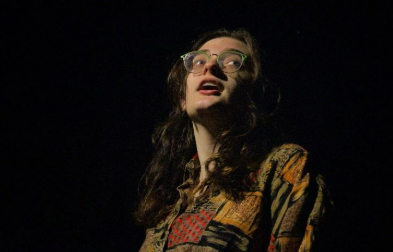
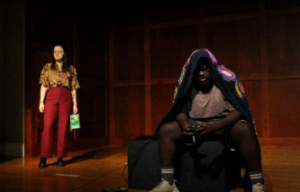
The theater is dark and quiet. Not a sight, not a sound. But then a voice comes not from the stage but from the back of Issacs Theater. It’s Noah — played by Ashton Hall — the main character in “Completely Rotten,” the first half of a two-part student production, “Richard Green is Completely Rotten,” created by seniors Ella Baker and Jake Kolasa.
Baker and Kolasa met and began their first year at Susquehanna University in Professor Catherine Dent’s class, Intro to Fiction. In that class, they separately wrote two stories that would later become “Richard Green” — by Ella Baker — and “Completely Rotten” — by Jake Kolasa.
Prior to coming to Susquehanna, Baker had already been involved in theatre, being part of a children’s Broadway performance group and performing in middle school, though it wasn’t until she got to Susquehanna and joined the Shakespeare Club that she began directing them.
Kolasa, on the other hand, had no real experience with theatre before also getting involved in Shakespeare Club and joining in on the performances. In their sophomore year, both Baker and Kolasa took another class with Dent, this time a forms class on choreopoem.
“Choreopoem is sort of like slam, combining performance and poetry,” Baker said. “We did a lot of these ensemble or back-and-forth poems like in slam, and “Richard Green” isn’t a choreopoem, but I started to look at it differently.”
During this class, they wrote and performed a choreopoem together called “Red String Theory,” an experience that made them want to further develop a full play.
“I just remember when Ella first brought the idea to me, and we did a little dance,” Kolasa said with a laugh.
When the duo proposed their idea to Dent, they were backed wholeheartedly.
“[Dent] was just so helpful,” Baker said. “She helped us with getting Issacs and the whole process really.”
With Dent’s help, they knew when and where, but they still needed who would be bringing it to life, and more importantly, how these short stories could be adapted from papers to plays.
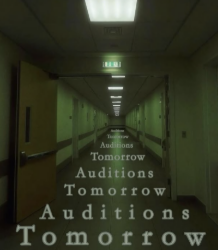
During the summer of 2025, they began a “hard launch” media campaign on Instagram, advertising that the play would be happening in the coming fall and that auditions were coming soon. They posted several unhinged and wacky memes as well as random stock photos to draw attention, which seemingly worked as the room filled with curious actors of all kinds. But there were just enough curious minds to fill the existing roles.
But it wasn’t all perfect, as both Baker and Kolasa realized from the first rehearsal that the questions of who and how were much more closely tied than originally thought.
By this point in their collegiate creative writing journey, they had earned a pretty good grasp on how to write and tell stories, but neither of them had much experience in converting a story into a performance. They both had experience in directing and performing already written and many-a-time adapted plays, such as those of Shakespeare, but how does one look at their own story and morph it into something completely different?
What really showed off the creative differences of written storytelling and performed storytelling is how dialogue and scenes actually played out once auditions had occurred, and Baker and Kolasa could fully see it happening before them.
“You’re just looking at this thing that you created, and you’re like, ‘wow,’” Kolasa said. “But you also start to see some issues when you actually see it happening… There are certain lines that feel unnatural or unnecessary.”
“It really evolved once we saw it the first time,” Baker said about the script.
Eventually, they were able to successfully adapt the two different stories into one balanced two-part play.
“The same day we went to the print shop and printed out all the scripts,” Kolasa said.
At first, rehearsals for “Richard Green” were only the first scene or two, slowly building up over time, just like the cast of narrators that slowly builds up and slightly complicates things, especially when it comes to scheduling. Baker said the hardest part of directing “Richard Green” was finding time for all the actors to meet and rehearse.
“Completely Rotten” was a bit different, usually doing a run-through of the entire story. The play only had three actors, yet they still encountered the same issues as “Richard Green,” especially with one actor who consistently showed up late for a while, but in time, things improved.
The first couple of rehearsals were a bit shaky — as most typically are — but eventually it all came together, and the actors truly came into their roles. Baker stated that the first performance where they were in Issacs Theater, and when Dent was watching it, “that’s when I knew they were ready.”
For Kolasa, it was a bit different. He couldn’t cite a specific case, but he did discuss a directorial method that he dubbed “speedball.”
“At first, there was a bit of an issue with energy, trying to get the actors to be at the same manic energy that the characters are at, so I came up with this strategy called speedball. I would pretend to inject them with a sort of heroin-cocaine mixture, and they would act all crazy,” Kolasa explained. “Any rehearsal after that, I would just have to yell ‘speedball!’ and then they would kick up with energy.”
Overall, Baker and Kolasa always spoke highly of their performers. Baker said, “They were all so great, and I think we all just had a lot of fun.”
A very similar thing was said by Lorraine Durbin.
Durbin is another senior studying creative writing who has been involved in theatre since she was eight years old. Since transferring to Susquehanna, she has been involved in several second-stage performances, and she immediately jumped at the opportunity to help Baker, one of her close friends.
“It was a no-brainer,” Durbin said when asked what made her want to be a part of it. “I knew this was something that Ella was passionate about, and I wanted to support her… At the end of the day, the best thing was seeing the look on Ella’s face after the performance. It’s a moment I’ll never forget.”
Durbin worked under Baker’s direction on some small stage productions in Shakespeare Club. “But this was different,” Durbin said. “There’s a different passion when it’s your own work, and you could see how excited Ella was about it.”
Durbin acted in “Richard Green.” Durbin was the first “Richard” on stage, and thus she was the character with the second most lines. She said she never struggled much with lines but was glad it was a sort of open script with the way the performance was laid out.
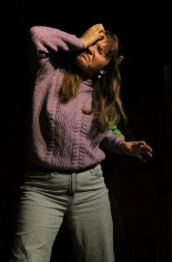
“Richard Green” had a lot of moving parts, both with characters and with the stage, and as anyone who has worked in theatre knows, a play is not just actors and directors; what really brings a performance to life is what happens behind the scenes.
Lily Warshaw is a sophomore studying theatre management and public relations who has also been involved in theatre since fourth grade and has worked backstage on several Susquehanna performances.
Warshaw wanted to get involved in “Richard Green is Completely Rotten” because “sometimes people forget about the little guy… Everyone’s always so focused on the main stage that they never look at the second stage.”
Warshaw said she wasn’t going to headline any main productions as a second-year student, and with her love for the second stage, she immediately accepted when Baker reached out to ask her to be the stage manager.
“This was my first time leading the stage,” Warshaw said, the one and only person behind the stage making the magic happen. “It was a lot easier than I thought it would be, but it was still complex. Jake’s — referring to “Completely Rotten” — was more moving stuff around, but Ella’s — referring to “Richard Green” — was a lot of prop setup.”
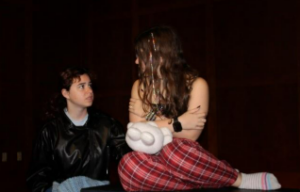
The highlight of working on these two performances for Warshaw was how different Baker and Kolasa’s approaches were: “I was pretty much the only theatre major on set. Most of the actors, Ella, Jake, and even Dent had no association with the theatre department.”
Both Durbin and Warshaw said they enjoyed their time working on “Richard Green is Completely Rotten” from the first rehearsal to the big night.
Before they knew it, it was opening night. The theater was dark and quiet. Not a sight, not a sound. And then Ashton Hall’s voice echoed the first lines.
“Richard Green” and “Completely Rotten” are two plays about many things. The performance opened with “Completely Rotten,” a more lighthearted and comical take on toxic relationships and how that looks from different perspectives.
“What I really wanted from [“Completely Rotten”] was to make people laugh,” Kolasa said. “Here is this thing, have fun with it.”
Kolasa said most of his writing is written without a “message” in mind. “But if there was one, it would probably be ‘Hey, look at this asshole guy’ — referring to Noah — ‘maybe don’t be like him,’ you know?”
On the flip side is “Richard Green,” a far darker and more solemn story on identity and the horror of losing oneself.
“I really wanted people to experience the horror of it,” Baker said. “The thought of constantly waking up as different people terrified me, and I just wanted to make the audience feel that fear.”
When asked about the future of the story, Baker said, “Well, I definitely want to distance myself from it for a long time. Maybe I’ll look at it again in ten years or something, who knows.”
“Richard Green” was published in River Styx — a magazine in St. Louis, Missouri — before it was performed this November. Kolasa also discussed hopes of getting “Completely Rotten” published at some point in the near future, possibly even in River Styx as well.
In all, “Richard Green” and “Completely Rotten” are two entirely different stories written and directed by entirely different people, yet when blended together, they turned out to be the perfect match. It may be a long time before either of these stories is seen again on a stage, but there is always the chance to read them for yourself.