






By Jaidyn Steinbrecher
You’re in a small Dutch city, away from the hustle and bustle of large cities like Amsterdam, Rotterdam and The Hague. The streets are lined with trees, tulips and cyclists. You walk through small family-owned bakeries and pop-up antique markets while the smell of spring hovers in the air.
Welcome to Maastricht, a city that welcomes Susquehanna students every season. I spent nearly six months in Maastricht in the spring semester of 2025 and grew deeply in love with it. But my time there wasn’t always easy.
Thus, I have made a list of tips and tricks to make your time in this wonderful city just a tiny bit better!
- Getting to Maastricht
- Where You’ll Stay
- What You’ll Eat
- Traveling Around Maastricht
- Maastricht University
- What to do in Maastricht
- Traveling Outside of Maastricht
- Dutch Holidays in the Spring
- Conclusion
- Getting to Maastricht
In my experience, the hardest part of completing any GO trip is the process of actually getting there. Getting to Maastricht was no different; however, I had lots of help from the program providers, the Center for European Studies or CES.
CES is made up of some of the kindest and most welcoming individuals, and they are there to help you every step of the way. Much of the prep work and paperwork is handled by CES, and you just need to submit your information. But as with any trip, there’s still plenty of preparation to do beyond the not-so-fun paperwork.
Preparation and Packing
As mentioned before, CES handles most of the hard stuff, so your focus should be on two main things. First, do your research on the location. This applies to any GO trip, but there are some things you’ll want to know about Maastricht. For example, local laws, not just Dutch law, but regulations specific to the Limburg province. You will also want to know about the customs and cultural differences; some of this will be covered in your GO class, but not everything. Most importantly, you’ll want access to medical and psychological care.
To emphasize, bring any medications you take regularly or might need; you likely won’t find your exact prescriptions in the Netherlands. Additionally, don’t assume you won’t get sick; your immune system will be in for a surprise in a new environment, let alone a new continent.
Packing is one of the hardest parts of preparing but try not to overthink it. Start with your essentials: documents, medications, hygiene products and so on. After that, bring a good variety of clothing. Dutch weather can go from beautiful and sunny to gray and rainy in a heartbeat.
No need to pack bedding but do bring towels and the things that bring you comfort or joy. You’ll be abroad for five to six months and will have downtime, so pack games, books or hobby supplies.
And one last thing: leave extra space in your suitcase or bring a second one. You’re probably going to buy a lot while you’re there, and you’ll get attached to most of it!
Transportation
Now for the really fun part: getting there. I. Hate. Flying. This was honestly the worst part of the entire experience for me, but it doesn’t have to be for you.
CES will pick you up at Amsterdam’s Schiphol Airport if you arrive on the official arrival day, so your only concern is booking the flight.
I used the Skyscanner app to find not only my flight to Amsterdam but for every other flight I took. It’s super easy to use and shows you the best deals available. I won’t lie, international flights are expensive no matter what, but Skyscanner gave me the best options overall.
- Where You’ll Stay
So, you’ve just landed on Dutch soil and have taken a two to three-hour bus ride, but you’ve finally arrived!
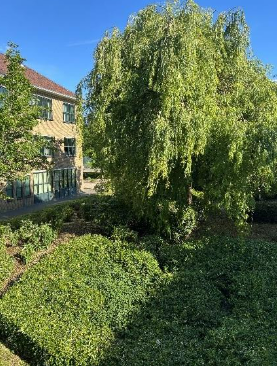
Your home for the next few months is the UM Guesthouse, where you’ll live in either C-Building or P-Building.
I lived in C-Building, but I’d argue that P-Building was the better option — it offered private kitchens, while C-Building had shared communal ones. I was lucky enough to have a single room that was larger than any dorm I have ever had at Susquehanna. It came with standard bedroom furniture and even had its own sink.
The Guesthouse was a pretty big place. It included a café, mailroom, laundry rooms, doctor’s office, pharmacy and more. It also houses a large number of international students from around the world.
In my hallway alone, I met people from Australia, Germany, Chile, Italy, Spain, Ireland, Scotland, France and Türkiye.
Meeting students from so many different backgrounds made my experience incredibly enriching. I got to learn their stories, hear different perspectives and of course, try a variety of foods from their home cultures. Which brings me to my next point…
- Where You’ll Eat
Food! The best part of any trip. Because Maastricht University does not have a central campus or typical residence halls, there is no official dining hall. This means that you have to make or buy all your own food. This was a struggle at first, but the situation allowed me to take responsibility and grow as an individual.
Cooking
Because you’re going to have to buy food somewhere, Brusselsepoort (a mall), which is essentially the Dutch version of a superstore, includes all the shops you’ll need.
Albert Heijn and Jumbo are the main grocery stores. Action is where you can grab most of your miscellaneous items. These three stores will cover most of your needs, but Brusselsepoort also has shops for your interests such as clothing, shoes, electronics, crafts, games, and more.
I personally shopped at Jumbo or Aldi, which isn’t in Brusselsepoort but is slightly closer to the Guesthouse, because they’re a bit cheaper than Albert Heijn.
I also recommend buying some inexpensive kitchen utensils and dishes because even though everyone at the Guesthouse was technically an adult, that didn’t mean people like doing their dishes.
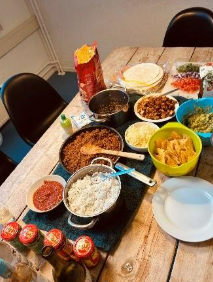
That said, kitchen life at the Guesthouse was usually a lot of fun. You’ll often be cooking alongside others, and it was common to share meals or try each other’s food. We even had group events like a cultural potluck and a silent dinner — which, believe it or not, was way more fun than it sounds.
Eating Out
Going out to eat isn’t the most budget-friendly option, but there were definitely restaurants worth trying.
Dutch cuisine isn’t always the most exciting, often resembling the food of neighboring countries, but the Netherlands is a cultural melting pot, much like the United States. You’ll find Indonesian, Surinamese, Turkish, and Indian restaurants all over Maastricht, offering some truly delicious meals.
Some of my favorites were:
- Breakfast:
- Charlie’s Coffee – the café inside of the Guesthouse
- Fixed Gear Coffee – a nice quaint café where many of the students studied
- Sweet Coffee – another café right on the river, though it was a bit less student centered
- Lunch and Dinner:
- Oodles of Noodles – a great and inexpensive place to get Asian cuisine
- (Big and Little) Dadawan – a somewhat more expensive place to get Asian cuisine
- Musti Kebab – an inexpensive Turkish place
- Friedt – one of the best (and few) fried food places
- Pasta Corner – a semi-cheap Italian place
- Bello & Buono – an amazingly cheap sandwich shop near the main student building
- De Pizzabakers – an Italian sandwich shop next to the student building
- Sweets:
- Ginnies Maastricht – a family run bakery that was run by some of the nicest people
- Pinky – essentially the Dunkin Donuts of Maastricht due to aka there being one on every corner

(Photo Credits: Jaidyn Steinbrecher)
- Traveling Around Maastricht
There are three main means of transportation in Maastricht: walking, biking and public transport. All of these have their pros and cons, which I will delve into in each section below.
Walking
Walking was my main choice because it was easily the cheapest form of transportation since it’s free. It’s also amazing exercise, and I reached my peak physical form while in Maastricht because I walked about 5-7 miles each day.
In general, walking was incredibly easy in Europe, but Maastricht was by far the most walkable city I visited. It’s mostly flat, simple to navigate, and highly accessible to people of varying abilities.
Biking
Biking was the next most popular option. With a student discount, it cost around €15 per month with Swapfiets.
I started out with a bike, thinking I’d enjoy it since I love mountain biking back in the U.S. While mountain biking is more physically intense, I still struggled to keep up with the native Dutch bikers, even on flat terrain. The Dutch are raised on bikes from a young age, and it shows. Even the most skilled American riders were passed by children and elderly locals with ease.
Public Transportation
Finally, there was public transportation. Not only were buses much more prevalent in Maastricht, but they were also cheaper compared to the U.S. Some buses charge per stop, while others used a flat fare. To board, you scanned your debit/credit card or an OV-chipkaart, which was a rechargeable transit card that was often cheaper in the long run. For distance-based fares, you would need to scan out the same way you scanned in.
I didn’t use buses very often, but they were a lifesaver when I was late to class, or when it was raining and I just didn’t feel like walking.
- Maastricht University
Maastricht University itself is very different from Susquehanna. It doesn’t have residence halls or dining halls, but it does have academic halls. The academic buildings are spread across the city, with some being right next to the Guesthouse and others being across the river.
Each building represents its own branch of study, such as the humanities building, FASoS, or the business building, SBE; there is also the Student Services Centre where you will likely have about half of your classes. These are the more general education classes and are typically only for CES students.
Classes at UM are structured very differently compared to most U.S. universities.
Typically, you’ll have one lecture per week, taught by the course’s primary professor. Immediately following the lecture, you’ll attend a tutorial, which is a smaller, discussion-based session with around 15 students. Tutorials are led either by a professor or a student tutor.
The majority of your academic work is done outside the classroom. During tutorials, which meet twice a week, you’ll discuss your readings and assignments rather than being introduced to new material.
Since classes usually only take place three out of five weekdays, you’ll find yourself with plenty of free time — perfect for exploring Maastricht and traveling around Europe.
- What to do in Maastricht
Maastricht is a fantastic city to live in and explore, with so many things to do. During the day you can go on long walks around the city and nearly every night there are people out and about in the streets.
During the Day
During my free time, I usually spent at least one of my days exploring Vrijthof, one of Maastricht’s central squares. There was almost always a pop-up market happening — sometimes with food, sometimes antiques, and sometimes just a mix of everything. Each visit felt a little different, which made it easy to come back week after week.
In addition to its vibrant town centers, Maastricht was full of green spaces. There are several parks scattered across the city, but the absolute best was Sint Pietersberg.

Not only was it a great place to walk — I spent hours there nearly every week — but it’s also a historic site, complete with old forts and a massive, abandoned quarry. It was peaceful, beautiful and full of history — a perfect break from classes and city life.
If you’re more interested in the academic side of travel, you’ll be pleased to know that Maastricht is rich with museums and historical monuments scattered throughout the city.
Be sure to visit Helpoort, the oldest city gate in the Netherlands. The surrounding city walls, underground tunnels and towers are free to explore; they offer fantastic photo opportunities.
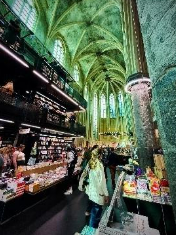
In the Evening
As day transitions into evening, Maastricht takes on a relaxed yet vibrant vibe.
A great way to spend the early evening was by having dinner at a local café or casual restaurant, then heading to brown cafés — traditional Dutch pubs with warm wood interiors — where drink prices tended to be moderate.
Around Vrijthof Square and nearby areas, you’ll find several cafés where you can sip beer or wine, enjoy the local atmosphere and not feel pressure to spend too much.
For larger events like concerts or theater productions, check local listings. Smaller music venues and theaters often had modest entrance fees. Churches such as Sint Janskerk sometimes welcomed visitors or hosted small concerts.
Taking a nighttime walk by the river, crossing the Sint Servaas Bridge, and seeing the city lights reflecting on the Maas River was both free and beautiful.
For night owls, there are clubs, but cover charges vary. Going on off nights or when no big headliners are in town usually meant lower costs.

- Traveling Outside Maastricht
What makes Maastricht even better is its proximity to the rest of Europe. Maastricht is on the far southern tip of the Netherlands putting it right between Germany and Belgium, making both very easy day trips. The transportation in Maastricht allows you to easily travel between cities in a timely manner.
By Train
The train station is Maastricht’s main transportation hub. Located just beyond the river, you can take quick train rides to nearby cities in under an hour or two — places like Liège, Aachen, Luxembourg City, Utrecht, Rotterdam, Cologne, Brussels and more.
The downside? Train travel can be expensive and prone to delays. During my time there, ongoing strikes occasionally made trains unreliable, preventing me from reaching some destinations. Luckily, there’s a cheaper and often more reliable alternative.
By Bus
Just behind the train station is a bike storage area and a bus hub where you can catch local and long-distance buses. FlixBus and Flibco, don’t confuse the two, offer extremely affordable bus journeys across long distances, some routes lasting up to four hours. If the train is too costly, buses are usually a great alternative.
By Plane
And finally, the least common option is flying out of Maastricht Aachen Airport. The problem with airport travel is the fact that it only flies to a couple of destinations intermittently.
With CES
Even if you can’t travel much while abroad, you will still be treated to three major trips entirely provided by CES: the Berlin trip, the Dutch Day Trip, and the Paris Cultural Weekend. The Berlin trip is typically in the first few weeks and lasts an entire week. The Dutch Day Trip is where you can explore some regions across the Netherlands, and the Paris Cultural Weekend is a long weekend trip in the city of love.
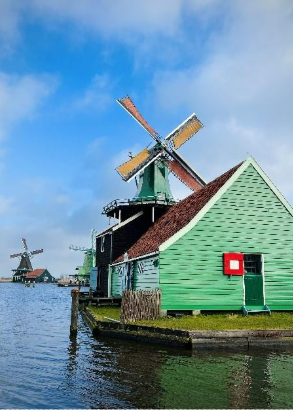
- Dutch Holidays in the Spring
Finally, there are some notable Dutch holidays that take place in the spring that you should be aware of. There are the Judeo-Christian holidays like Easter, Ascension Day, and Pentecost, with each having their own Dutch spins. However, there are also other Dutch holidays that you may not know about.
Carnaval
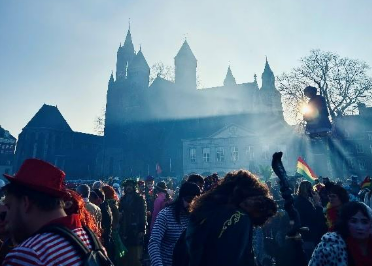
Carnaval in the Netherlands is a lively, festive celebration held mainly in the southern provinces. It typically takes place in the days leading up to Lent, usually in February or March.
The holiday features colorful parades, elaborate costumes, music, dancing, street parties, and plenty of alcohol. Traditionally, Carnaval is a time for people to let loose, enjoy social gatherings, and temporarily turn social norms upside down.
While it has deep cultural and religious roots, Carnaval today is mostly celebrated as a fun and inclusive festival.
Koningsdag
Commonly called King’s Day or Orange Day, Koningsdag celebrates the Dutch Royal Orange Family. The holiday not only celebrates the royal family, but it’s also a day for the Dutch to show national pride.
From an American perspective, it’s like St. Patrick’s Day or the Fourth of July.
While Carnaval is a huge party in the southern Netherlands, Koningsdag is bigger in the northern regions; it is celebrated nationwide. The day involves street markets, music, and people dressed in orange. Cities and towns host outdoor concerts, flea markets, and various festivities, all emphasizing community and national pride.
Liberation Day
Liberation Day is the least bustling of the three national celebrations. It’s observed annually on May 5, marking the end of Nazi occupation in 1945 and the start of the country’s freedom and independence.
The day is commemorated with festivals, concerts, and ceremonies honoring veterans and those who fought for freedom. It is both a solemn remembrance and a joyful celebration of liberty, with a strong emphasis on peace and democracy.
Liberation Day is a key national holiday symbolizing hope and resilience.
- Conclusion
If you couldn’t tell already, Maastricht has become one of my favorite places in the world and I will deeply miss it and everything that came along with it. Not only was the city itself an absolute beauty of European architecture, but the GO program itself was absolutely amazing, too.
I highly recommend Maastricht to any students looking for a deep immersive experience that provides lots of freedom to students to explore the Netherlands and Europe as a whole. In your time here, you will not only gain lots of cultural experience, but also a sense of responsibility