






By Rylee Baker
Drink spiking is the act of tampering with someone’s beverage, usually adding alcohol or other substances, without their knowledge or consent, and it can happen to anyone.
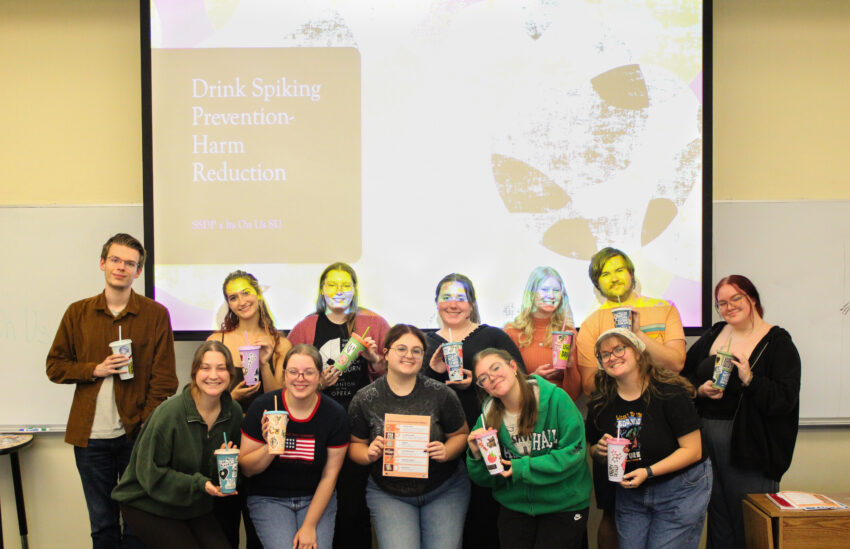
I recently attended a seminar on the dangers of drink spiking held by Students for Sensible Drug Policy (SSDP) and It’s On Us: the SU Chapter. Drinking spiking is a well-known idea, but poorly misunderstood. I left the seminar feeling more educated on drugs, how to prevent things such as date-rape and how to react in the case of an overdose.
The seminar started with SSDP’s president, Abbi Mack, leading the PowerPoint. She first played a video that showcased a victim of drink spiking. The woman in the video tells a heroic tale of how she got spiked by a stranger at a bar, and shortly after went into muscle spasticity, meaning, all her muscles tensed and contracted violently at the same time. Later in the ICU, she had a seizure.
Unfortunately, this is just one of thousands of cases that happen each year. According to a study on 900 college students in 2023 by Alcohol.org, 52% said they had ingested something that was spiked. Unbeknownst to popular belief, drinks aren’t the only thing that can be spiked. Food is can also be laced with drugs like marijuana, LSD and/or acid.
Some of the most common types of “date-rape drugs” used in drinking spiking are Rohypnol, Valium, GHB and Ketamine. All these drugs have sedative effects in low doses and can be very dangerous because many of the symptoms of these drugs are similar to the symptoms of being drunk. These symptoms include slurring of speech, confusion, blurry vision, loss of cognitive function, and more. This leads many to believe the victim is at fault for drinking too much.
Most date-rape drugs are flavorless and odorless, making them difficult to detect, but there are some signs to watch out for. Sometimes your drink will taste a bit different, with many describing a salty taste when the drug is added. Also, be aware of fizzing or extra bubbling in your glass. Ice in a cup should float, so if your ice all of a sudden has sunk, there’s a good chance that something has been added to it.
You can also purchase products to help prevent spiking. Anti-spike drink covers, or the name brand Night Cap, are fabric drink covers that only leave enough room for a straw. This makes it much more difficult for people to spike drinks unnoticed, and they offer a single-use sticker option as well. Drink test strips, that can detect common drinking spiking drugs, are also a good option. If you feel unsafe, pop a test strip in your cup and it will indicate if there’s any drugs present by changing color.
If you are in a situation where you believe that you or someone else has been spiked, please remove yourself or your friends from the party and find help. Help could be an authority figure, the police or the employees of any event or bar you’re at. Make sure that the victim is hydrated and has enough food and water in their system. If an assault occurred, go to the hospital to request a drug test and/or rape kit.
Keep in mind that if you don’t go to the hospital immediately, you still have time to get help. GHB stays in the system for 24 hours, while Rohypnol stays in the system for 72 hours. It is best to receive a drug test within the first 24 hours of the incident.
A misconception about drug tests is that the hospital will give them out to anyone who asks, but this isn’t the case. The hospital is not required to give anyone a drug test unless an assault has occurred (laws may vary by state). Of course, you can always advocate for yourself, but most of the time, insurance won’t cover the procedure.
The best way to prevent drink spiking is by simply not doing it, but unfortunately, you cannot rely on humanity. Be aware that when you go out and do drugs, there’s no space in the world that is completely safe.
Having a seminar like this offered to students is extremely important for social education. Thank you, Students for Sensible Drug Policy and It’s On Us Susquehanna, for allowing me to cover this event.
Campus Resources if you need help:
- CAPS: 570-372-4751
- VIP Center: Phillipsw@susqu.eduTransitions of PA: 1-800-850-7948