






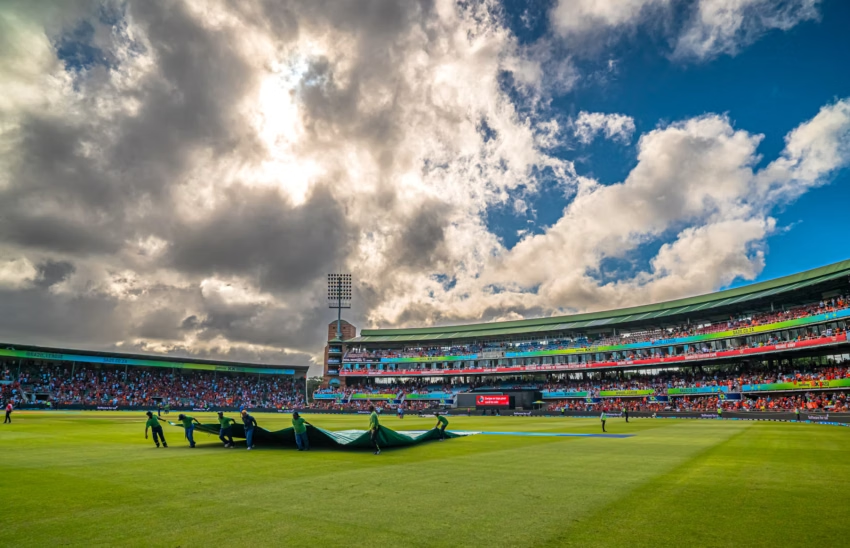
Photo Courtesy of Khurshid Dustmurodov
By Thamoda Haputhanthri
*Editor’s Note: This story is a part of a new series of column written stories*
Almost a decade after one of the most controversial moments in cricket history, Australia Cricket’s 2018 ball-tampering scandal has come back into light.
Former Australian opening batter, Usman Khawaja reignited the flames of the controversy through his recently released autobiography, Sabr, alleging that the entire Australian dressing room knew about the 2018 sandpaper ball tampering plot in South Africa.
The controversy, commonly referred to as “Sandpaper gate,” originally unfolded during Australia’s 2018 Test tour of South Africa.
However, Khawaja’s latest revelations, alongside comments from former teammate David Warner and Cameron Bancroft, have brought renewed attention to an incident that Cricket Australia, the identity that governs professional cricket in Australia, previously considered resolved.
Before we can delve into the recent controversy, we must revisit and understand the events of Sandpaper gate.
It was the third match between Australia and South Africa at Newlands Cricket Ground in Cape Town on March 24, 2018, where Australian batsman Cameron Bancroft was caught on television using a piece of sandpaper to roughen one side of the cricket ball.
The idea was to utilize the sandpaper to manipulate the ball’s condition to generate reverse swing, a technique which allows for bowlers to make an older cricket ball move unpredictably through the air.
In the laws of cricket, players are permitted to maintain the ball through approved methods, such as polishing it using their clothing. However, deliberately using a foreign object to alter its condition is prohibited.
Following the incident, both Australia’s Steve Smith admitted that members of the team’s leadership group had discussed the plan, whilst also mentioning he knew about the plan yet failed to prevent it.
This incident brewed up a media storm, with the Australian media framing it as a profound moral failure and a stain on the integrity.
Australia’s Prime Minister at the time, Malcolm Turnbull, stepped in by phoning Cricket Australia Board chairman to directly express his disappointment and concern.
An independent, wide-ranging review by ethics nonprofit organization The Ethics Centre, conducted in the aftermath of the affair, exposed a culture of “winning without counting the costs” that seeped throughout Cricket Australia.
Cricket Australia launched their own investigation into the matter, and found that Smith, Warner and Bancroft had been charged with bringing the game into disrepute, suspended and would be sent home.
Smith and Warner received 12-month suspensions from international and domestic cricket, while Bancroft received a nine-month suspension. Warner was also permanently barred from holding a leadership position within Australian cricket.
And now, eight years later, Khawaja’s recent autobiography ‘Sabr: Finding my way in cricket and life’ released in November 2026 in which Khawaja challenged the original version of the events.
Khawaja argued that the knowledge of the ball-tampering plan extended beyond the three players who received suspensions.
He also alleged that sandpaper had been used during the second match in Port Elizabeth, weeks before Bancroft was caught on camera in Cape Town. Khawaja argued that the team should have faced consequences rather than isolating Smith, Warner and Bancroft and maintained that he was not trying to trigger new bans or throw teammates under the bus but simply sought out to tell his truth.
As you may expect, these new revelations caused absolute chaos. Warner, who remained silent for the most part when it came to the scandal, described Khawaja’s account of the event as “100 per cent accurate” also stating, “I still stick by Uzzy and what he’s written in that book, because it is the truth, and I really, really support him.”
Bancroft published a lengthy 4000-word statement alleging that the original public explanation did not fully reflect the extent of what occurred in South Africa.
Bancroft went on to state that the knowledge of the sandpaper’s use extended throughout the team and even members of the coaching staff, including Darren Lehmann.
However, not everyone seems to agree with Khawaja’s account of the events. Australian captain Pat Cummins, who was part of the 2018 touring squad, strongly denied knowing that sandpaper was being used to alter the ball.
He also rejected suggestions that he helped organize or participated in the scheme, stating Khawaja was “100 per cent wrong” and it was “complete and utter nonsense.”
Ultimately, nearly nine years after the events of Sandpaper gate shocked the world of cricket, the controversy seems to be far from settled.
With conflicting accounts from former teammates and members of staff, questions surrounding the background of this incident may never receive a definitive answer.
Australian cricket now has a dark question that looms over them: Was the 2018 scandal truly the actions of three individuals, or was there more to the story than the public was ever told?