






By Hannah Bower; Photo Credits to Hannah Bower
“We are the dead.”
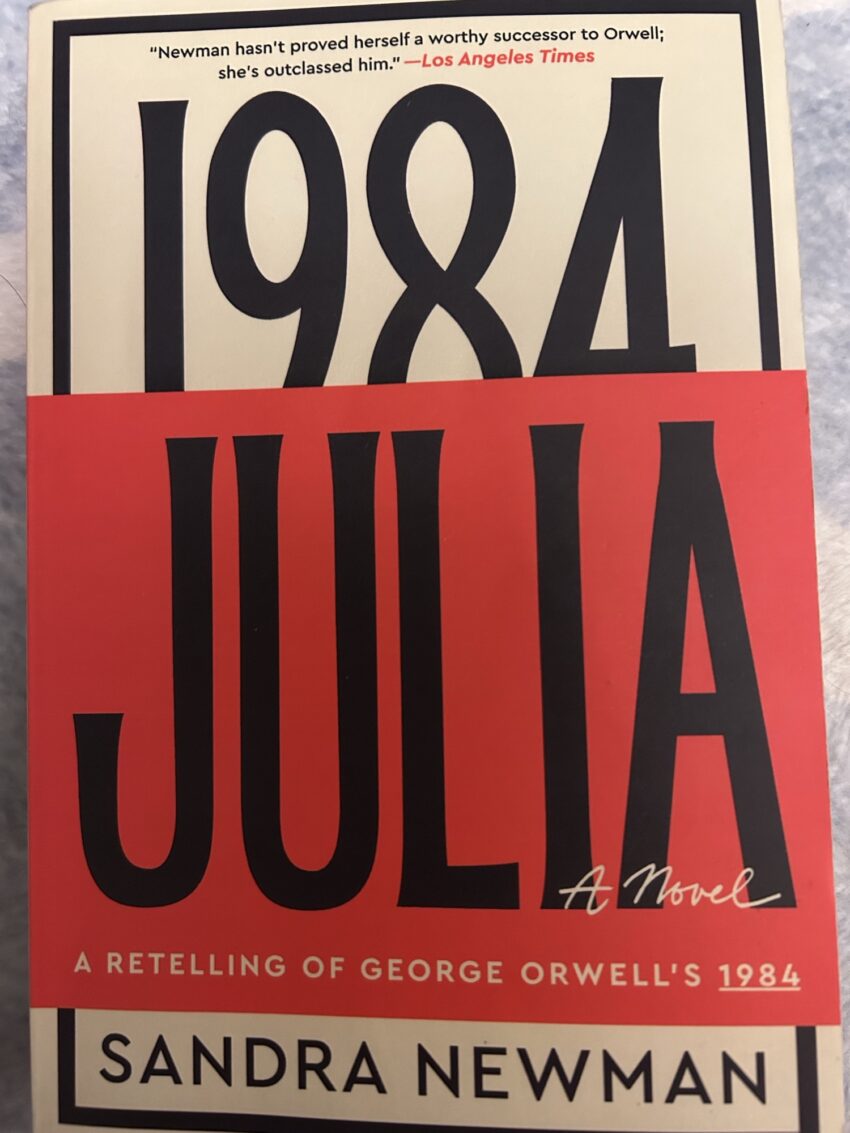
If you’re a fan of George Orwell’s “1984,” you’ll recognize this chilling phrase. However, Orwell only covers one side of the story, and Winston Smith could not have rebelled on his own. “Julia” by Sandra Newman explores the backstory, downfall, and inner conflicts of Winston’s lover, Julia Worthing. Looking at the dystopian society Orwell created, Newman highlights the experience of being a woman who is betrayed by her world, her allies, and herself.
Julia works as a mechanic in the Ministry of Truth, an Outer Party district responsible for the destruction of newspapers, books, and art, and rewriting them to suit the Party’s needs. A member of the Junior Anti-Sex League, Julia has a different life behind closed doors, Where she rebels in more ways than one. She helps her best friend Vicky dispose of her dead newborn and couples with several men where there are no telescreens. Plaguing Julia is the memory of how she turned her mother in when she was a teenager and a horrible premonition of being tortured for information at the Ministry of Love.
Later, Julia has to make a choice. O’Brien, a stoic Inner Party member, pulls her aside and tells her that he knows about the work she does. Rather than turning her in, he strikes a deal with her to help lead thought criminals to him. Though she never feels anything like love towards the men she encounters, Julia feels a pressing guilt. She contemplates telling them the truth, but then she risks getting turned in, herself.
“We are the dead” is a phrase that is reminiscent of this whole retelling. Julia knows that no matter what she does, the Party will discard her when they are done using her to their benefit. She wrestles with her own sense of self, the feeling that she is supposed to love Winston, but she can’t. More importantly, she learns what it means to feel hate. The Party knows it is the one thing she can’t do, no matter how closely she follows their rituals. However, when she is taught how to hate, it proves to be more of a curse to the Party than they realize.
“Julia” is a depiction of hypocrisy, control, resistance, and women’s autonomy in a world inspired by historical events. I would highly recommend this book for those who love gritty, bleak retellings, written by a woman from a female character’s perspective.